

WorldSkills Shanghai 2026 shows why skills still matter in the age of AI
Artificial intelligence is changing the way people work at a remarkable speed. Tasks that once required hours of human effort can now be completed in seconds, raising a question being asked across industries and around the world: What will human skills mean in the age of AI?
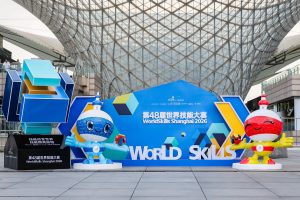
In Shanghai, the answer is being played out on the Competition floor. The 48th WorldSkills Competition opened on 22 September, bringing together nearly 1,400 Competitors from around the world to compete in 64 skills. Their work spans some of the most advanced areas of modern industry, including Industry 4.0, Robot Systems Integration, and Software Testing, as well as fields that still depend heavily on human expertise, such as Bakery, Hairdressing, Jewellery, and Welding.
WorldSkills does not simply decide which skills should appear on the Competition programme. Before each Competition, WorldSkills International reviews the skills in response to changes in industry and labour markets.
Wang Di, director of the WorldSkills Competition China (Shanghai) Research Centre, said that principles including labour market representation and cross-regional relevance are considered when skills are retained, adjusted or introduced. A skill must reflect global employment trends and occupations in demand across multiple economies and at least three continents or regions.
In other words, the skills that make it onto the Competition portfolio have withstood industry changes and the impact of AI while continuing to be recognized by labour markets around the world.
Software Testing provides a useful example. AI can now generate scripts, execute large numbers of tests and analyze logs, taking on many repetitive elements of the work. But at WorldSkills, the focus remains on what the Competitor can do with those tools.
The principle is simple: human-led, AI-assisted. Competitors still need to understand the requirements, identify problems, assess whether the results make sense, respond to unexpected situations, and take responsibility for the outcome. These abilities are at the heart of what WorldSkills Competitions measure.
According to Wang Jun, a senior technician and former skills expert at Baosteel, the experience accumulated by skilled workers can be converted into data, algorithms, and operating standards. Still, people remain responsible for setting parameters, interpreting information, and making the final call.
The young Competitors gathered in Shanghai are demonstrating technical excellence. But they are also showing something broader: the future of work will depend on people who can learn, adapt, make decisions and turn knowledge into results.
As AI becomes more capable, the value of those abilities becomes clearer. Algorithms may become faster. Tools may become smarter. But behind every technology is still a person who knows how to use it, question it, improve it and take responsibility for what it produces.