

Global voices call for stronger cooperation on skills development
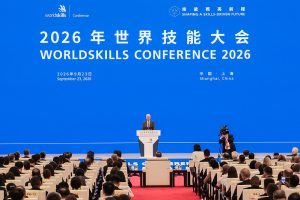
The WorldSkills Conference 2026, held from 23 to 25 September at the National Exhibition and Convention Center (Shanghai), brought together over 50 ministerial-level officials and around 2,000 representatives from governments, international organizations, vocational schools, training institutions, and businesses.
Across a series of sessions, participants explored how skills development can respond to changing economies and create more opportunities for people around the world. A recurring theme was the need for stronger international cooperation.
Participants called for more practical and sustainable cooperation through multilateral and bilateral platforms.
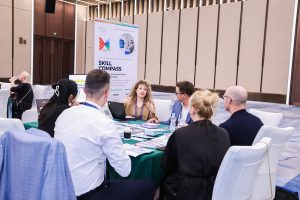
“Building a shared and common language for skills is, in my view, one of the key steps toward driving change, advancing development, and reaching consensus,” said Hao Bin, Assistant Director General of the International Labour Organization.
He noted that different sectors currently operate with their own occupational standards and training systems, which can make communication and cooperation difficult. Greater mutual recognition of qualifications, he said, could help bridge these gaps.
The role of business was another major focus of the discussions. Representatives from companies and industries shared their experiences in developing skilled talent and explored how to bring more resources into skills development and strengthen collaboration between education and industry.
Wen Tao, CEO and president of Neutech Group, said companies should no longer be seen simply as employers waiting at the end of the training process. Instead, they should be involved from the outset in shaping how people are trained.
“Skills innovation cannot be achieved by any single stakeholder. It requires coordinated efforts from all sides,” he said.
“Businesses,” he added, “can contribute directly to occupational standards, curriculum design and hands-on training, bringing real-world projects, emerging technologies and changing workplace needs into the learning process.”
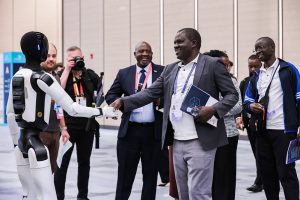
Young people also played a prominent role throughout the Conference. Representatives of the WorldSkills Champions Trust took part as speakers and moderators, bringing their own experiences to discussions about the value of skills.
Leyla Valiyeva, the WorldSkills Champions Trust representative for the Middle East and North Africa, drew on her own journey to encourage more women to pursue opportunities in skills. “Skills have no gender. Passion and ability determine how far you can go,” she said, while calling for greater attention to women, people with disabilities and skills development in rural communities.
For Diego Andres Lopez Garo, the WorldSkills Champions Trust representative for the Americas, skills are closely tied to personal choice and opportunity.
“Skills gave me the freedom to choose,” he said. Recalling his first WorldSkills Competition experience, he said mastering a skill gave him a greater sense of control over his future and the freedom to decide who he wanted to become.
Together, the discussions highlighted a shared vision: making skills development more connected, inclusive and responsive, while giving people, especially young people, more opportunities to shape their own futures.