

From traditional trades to emerging tech: Inside WorldSkills Shanghai 2026
Nearly 1,400 young professionals from more than 65 countries and regions have arrived in Shanghai for four days of competing, as the 48th WorldSkills Competition takes place from 22 to 27 September.
So what does it actually mean to compete at a WorldSkills Competition?
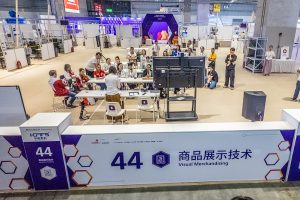
For some Competitors, it means turning a blueprint into a precisely built structure. For others, it could mean programming a digital solution, preparing a dish to exact specifications, repairing a vehicle or creating a piece of work that combines technical precision with creative flair.
Across 64 skills, the Competition brings together occupations from six broad sectors and offers a glimpse of how the world of work is changing.
The Manufacturing and Engineering Technology sector covers the technical foundations of modern industry, from product design and manufacturing to assembly, maintenance and advanced industrial technologies.
Construction and Building Technology encompasses a wide range of skills, including Bricklaying, Carpentry, Digital Construction, Electrical Installation, Plumbing and Heating, Refrigeration and Air Conditioning, and Wall and Floor Tiling. Precision is vital in this field; even a millimetre can make a significant difference. Proper material usage and adherence to technical specifications are essential parts of this challenge.
A new addition this year is Intelligent Security Technology, which brings smart security systems, their installation, and their application into the WorldSkills arena.
The Creative Arts and Fashion sector brings together skills spanning Fashion Technology, Visual Design, and Visual Merchandising. One of the new skills making its WorldSkills debut in Shanghai is Digital Interactive Media Design, which focuses on the visual design and user experience of digital products.
As digital technologies become increasingly central to the economy, so do the skills needed to build, manage and secure them. The Information and Communication Technology sector includes skills such as Cloud Computing, Cyber Security, IT Network Systems Administration, Mobile Applications Development, and Web Technologies. New this year is Software Testing, which focuses on identifying problems and ensuring that software performs reliably and consistently.
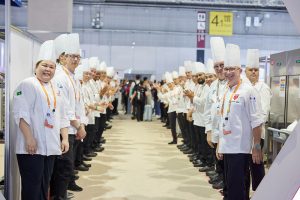
Skills in Social and Personal Services are closely connected to everyday life, but competing in them requires far more than practical know-how. Cooking, Hairdressing, Health and Social Care, and Restaurant Service, all require Competitors to understand needs, follow professional standards, and deliver results with precision. Dental Prosthetics and Retail Sales are among the new additions this year, further expanding the range of occupations represented at WorldSkills.
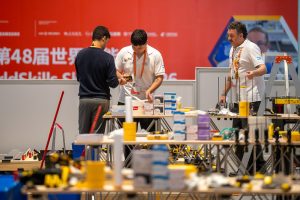
The Transportation and Logistics sector encompasses two main areas: the inspection, repair, and maintenance of transportation equipment, and the organization and coordination of logistics and freight forwarding. This year, Competitors are set to explore new areas, including Rail Vehicle Technology and Unmanned Aerial Systems.
Together, these skills tell a story that goes beyond the Competition itself. Some have deep roots in traditional trades, while others have emerged alongside digitalization, automation, and new technologies.
The skill competitions at WorldSkills are not fixed. They are regularly reviewed, with new skills introduced and existing ones merged, updated, or retired as industries evolve. Even when a skill remains, its technical standards and tasks can change.
Chen Yujie, a researcher at the Chinese Academy of Labor and Social Security, said these changes point to a broader shift in the skills needed for the future.
“Compared with workers who master a single skill, those who can use digital and intelligent tools, work across disciplines and think innovatively will have an advantage in the future,” Chen said. He also called for WorldSkills Occupational Standards to be incorporated into everyday vocational education, so that the advanced approaches and high-level skills showcased at the Competition can benefit more students and teachers at vocational schools.
Unlike a sporting tournament, WorldSkills has no rounds or knockout stages. All 64 skills are contested during the same four-day period, with skill competition tasks typically taking between 15 and 22 hours to complete. The work is overwhelmingly practical, and Competitors are assessed against detailed technical standards specific to their skill.
That can mean working to extraordinarily tight tolerances. In Bricklaying, a deviation of just one millimetre can cost points. In CNC Milling and CNC Turning, precision can be measured to 0.01 millimeters.
And technical skill is not always enough. In some skill competitions, creativity, interpretation, and the ability to turn an idea into a finished product can make the difference. Some skills also feature tasks with key details or materials withheld until the skill competition begins. Competitors must then draw on their fundamentals and adapt to a challenge they have not been able to prepare for.
There is also a strict age rule. Most Competitors must be no older than 22 in the year of the Competition, while the limit is extended to 25 for some skills that require longer periods of training and experience, such as Aircraft Maintenance and Industry 4.0. And unlike many international sporting events, there is no chance to return for another shot: each Competitor can only take part in a WorldSkills Competition once.
By the time the final tasks are completed, the Competition is set to have tested far more than individual technical ability. Across 64 skills, WorldSkills Shanghai 2026 brings together established trades and emerging occupations, traditional craftsmanship and cutting-edge technology, offering a snapshot of the skills shaping the future of work.