

A journey across the seas to reconnect: Peter Johns, 81-year-old champion of WorldSkills Competition, revisits his gold medal, letter of congratulations, and a video after 60 Years
The summer of sixty years ago, a group of enthusiastic young people sailed on the River Clyde, as the joyful sound of bagpipes filled the air, this was the grand welcome ceremony hosted by the Glasgow City Corporation for the participants of the 1965 Glasgow International Apprentice Competition. For over half a century, this moment, like the ripples on the water that day, has remained nearly unseen in the long history of the WorldSkills Competition.
However, in a display case within the “Celebrating a Successful Global Movement” section of the WorldSkills Museum, three assets have withstood the test of time to preserve a precious skill story, unveiling a little-known chapter of the WorldSkills Competition. They radiate the brilliance of craftsmanship that transcends borders and passes through generations.
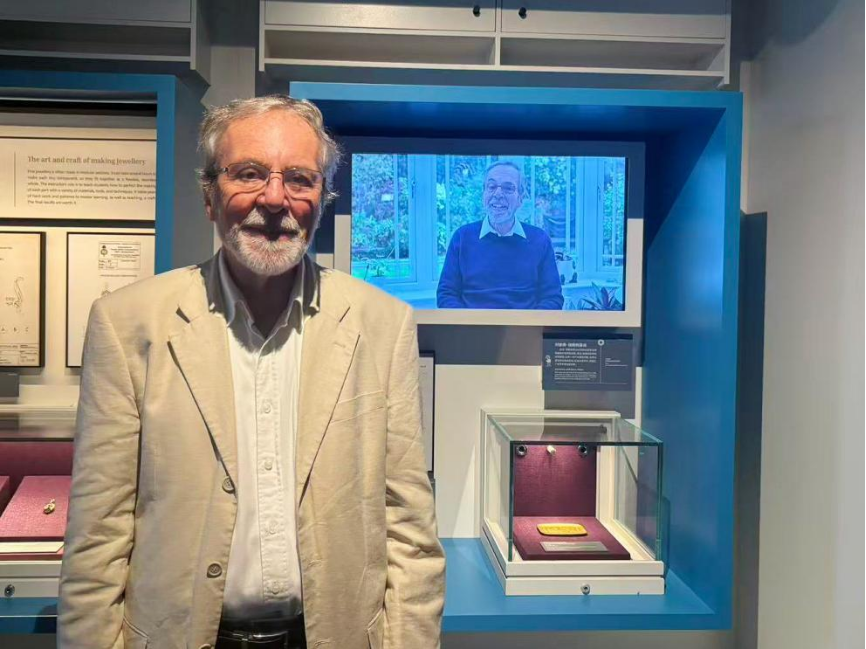
Many years later, one of those young men from that summer journeyed across the seas to the WorldSkills Museum. His once-black hair had turned white, but his bright eyes remained undimmed. He has traveled not just fourteen hours to be here, but a span of decades. Standing before the display case, Peter Johns, now aged 81, gazed at the long-parted assets with deep affection. He said, “It’s wonderful to see my personal history in the context of the WorldSkills Competition.”
“I am honoured to have been a small part of this competition.”
Entering Zone 2 of the WorldSkills Museum, you will experience, through text, artifacts, and images, how the successful WorldSkills movement rose from the post-WW2 ruins and evolved into a grand event that illuminates the skilled young people around the world. If the history of skills is the vast sky, then the skilled people are the stars, scattered throughout to form a dazzling galaxy.
In the asset cluster of Peter Johns, you will find the gold medal for Silversmithing from the 1965 Glasgow competition, a copy of a congratulatory letter from Prince Philip to the British team, and a video interview with Peter. This competition, which may sound unfamiliar to you, was actually the 14th International Apprentice Competition, and could be considered the predecessor of today’s WorldSkills Competition.
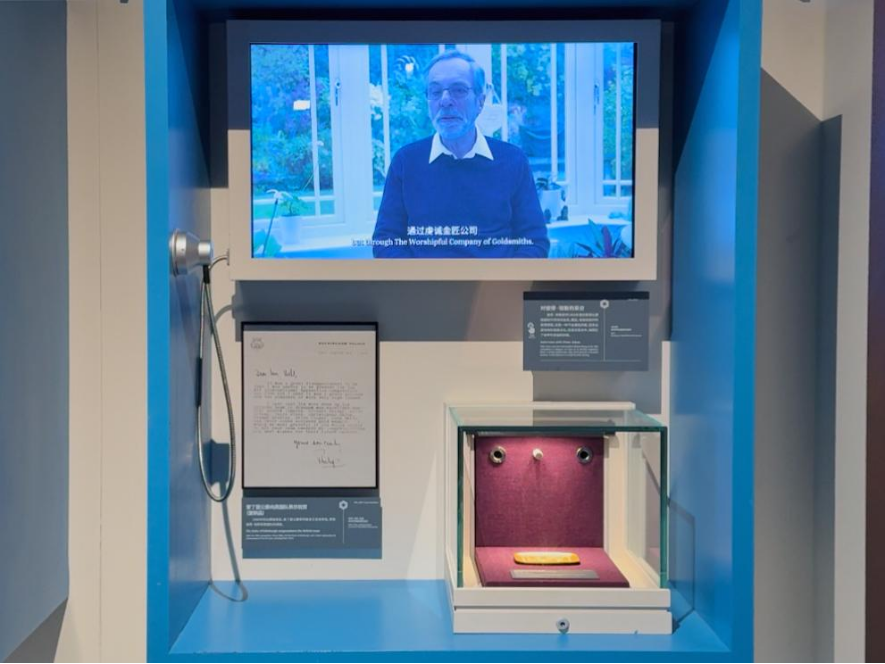
At that time, the WorldSkills International had yet to be established, and the International Apprentice Competition was organized in the UK by the “City and Guild of London Institute”. Although still in its infancy, lacking the scale and system of today’s WorldSkills Competition, the International Apprentice Competition still attracted ambitious young people from Europe and some Competitors from other regions of the world. All were eager to showcase their skills in a remarkable contest. Peter Johns was the champion of Silversmithing for the British team at the 1965 competition.
Silversmithing is different from the skill of Jewellery in today’s WorldSkills Competition, which focuses on fashionable and aesthetically pleasing wearable items. The works in silversmithing are larger and more practical. “Cutlery, drinking vessels, decorative objects. It can also be ceremonial, like badges of office,” Peter explains.
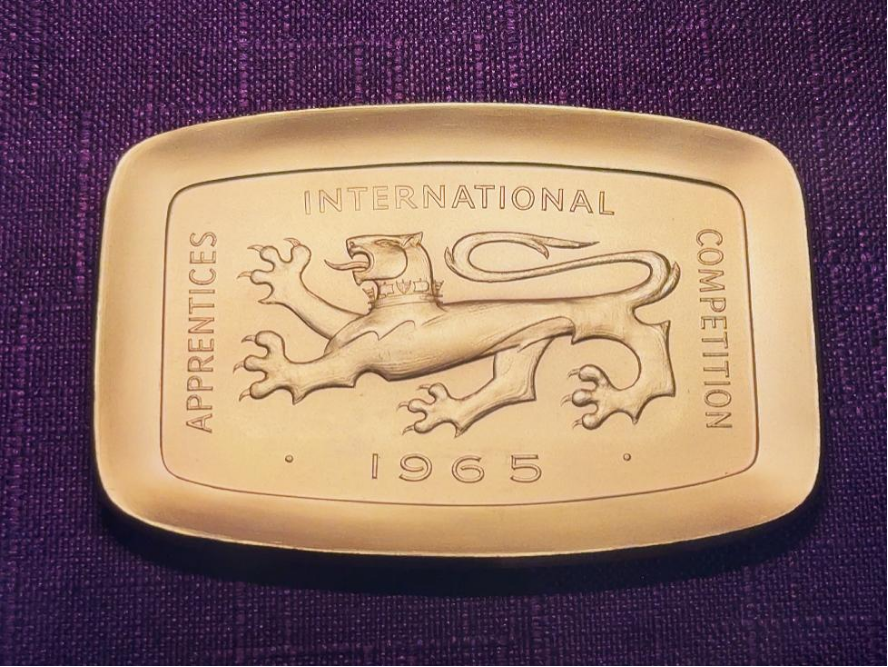
A drawing, one week, and skilled apprentices would tackle a common challenge. Peter recalls that the Silversmithing competition required handcrafting, with no machines allowed. Crafting the edges of the silverware was particularly difficult, as the process demanded precise hammering and accurate estimates of material size. A tiny miscalculation would result in failure.
For Peter, what separates the winners from the losers in the competition is not the gap in skill level. “I had that little bit more experience than my Competitors,” he said without hesitation. “They all have the same skills to make things work, but when things go wrong, it’s knowing how to get out of your mistakes that makes the winner of the competition.” Unlike today’s world of instant communication, when Peter won the gold medal he had to find a phone booth at Glasgow train station to share the good news with his employer.
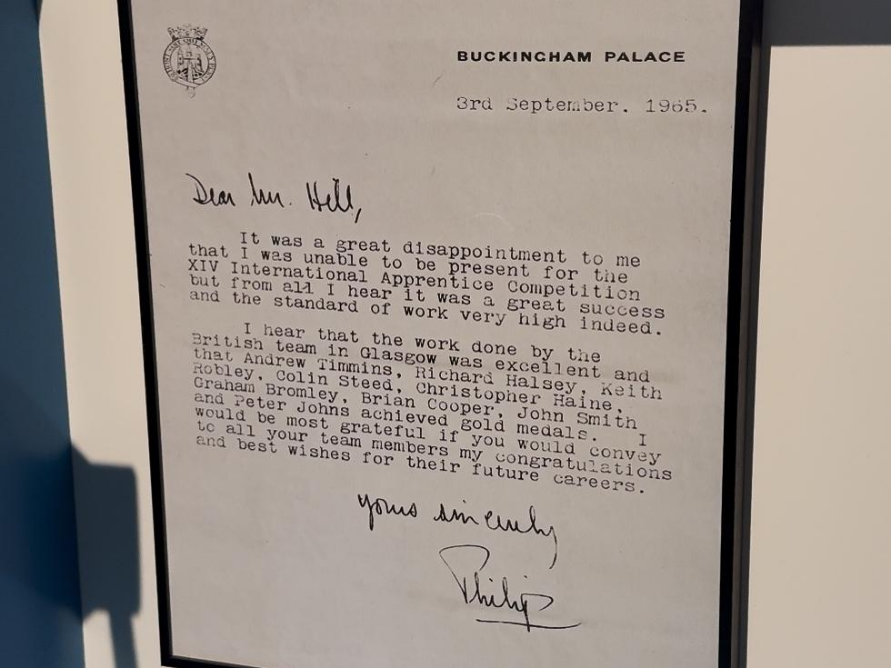
As Peter returned home as a champion, congratulatory telegrams and cards poured in. Along with these came a letter from Prince Philip, stating that although he was unable to be present, he would like his congratulations to be conveyed to all the winners.
However, the prestigious honours in the display case are, to Peter, just a small part of the story. While they may have brought him some recognition and opportunities, they were not always the focal point. Winning was not just about joy. “It was something that gave me confidence. I think that’s the main thing… You’ve been tested and you’ve come out okay.” Peter said.
An Apprentice Who Never Stops
Among the assets, there is a video of Peter discussing the apprenticeship system. The apprenticeship has always been a classic and vital system in the transmission of skills: the master passes on knowledge to the apprentice, and the apprentice grows to become the master. They carry the torch of learning and maintain public trust in product quality. As society progresses, the apprenticeship system has evolved with innovation, but its core values and the lifelong influence of skill learning on craftsmen have never changed.

Born in the 1940s in London, Peter’s career as a silversmith began with the old apprenticeship system. In those days, a contract would “loan” five years of one’s life to a company in exchange for training. Peter followed the traditional medieval based British apprenticeship system.
The goal he fought for was to complete a masterpiece to present to the prime wardens of the company before his apprenticeship ended, to become a freeman of the Worshipful Company of Goldsmiths like his master. The extraordinary “graduation project” — an ecclesiastical processional cross for the Church of England — still in use at Canterbury Cathedral to this day. Canterbury Cathedral is the oldest Christian structure in the U.K. Whenever Peter talks about his apprentice masterpiece his pride is obvious.
Having become a freeman, Peter worked in the industry for several years before moving into graduate training at Middlesex University in north London. Over the next several decades, from apprentice companies to university classrooms, from working at well-known enterprises to teaching at universities, Peter transformed from an outstanding apprentice into an exceptional master. He was pleased to see how the system of training craftsmen continued to evolve, with more freedom and opportunities for students to engage in hands-on work, producing many top designers and craftsmen for the industry.
“I think that the basis of training has not changed. You’ve got to learn those basic skills to be able to move on, to be able to do bigger and grander things.” Today, Peter is the inventor of the outstanding and patented — Argentium Silver. A new sterling alloy silver that has broken the centuries-old perception of silver that needs constant cleaning. Even in his later years, he still feels joy from the spark of inspiration that comes with a fresh idea and enjoys the new insights brought by AI. “I hope I’m open-minded enough to adapt to the new technologies which happen to come into the world as I still explore it,” he says.